We read Chapters 6-9 of this book then played the games below. I let my 15-year-old read the book aloud while the rest of us did crafts or drawing. Then we played the game below, because I had promised my 10-year-old we would play it yesterday and then we ended up not playing it. So despite it not having anything to do with History or Geography (I have the theme of History and Geography for Wednesday) we played it.
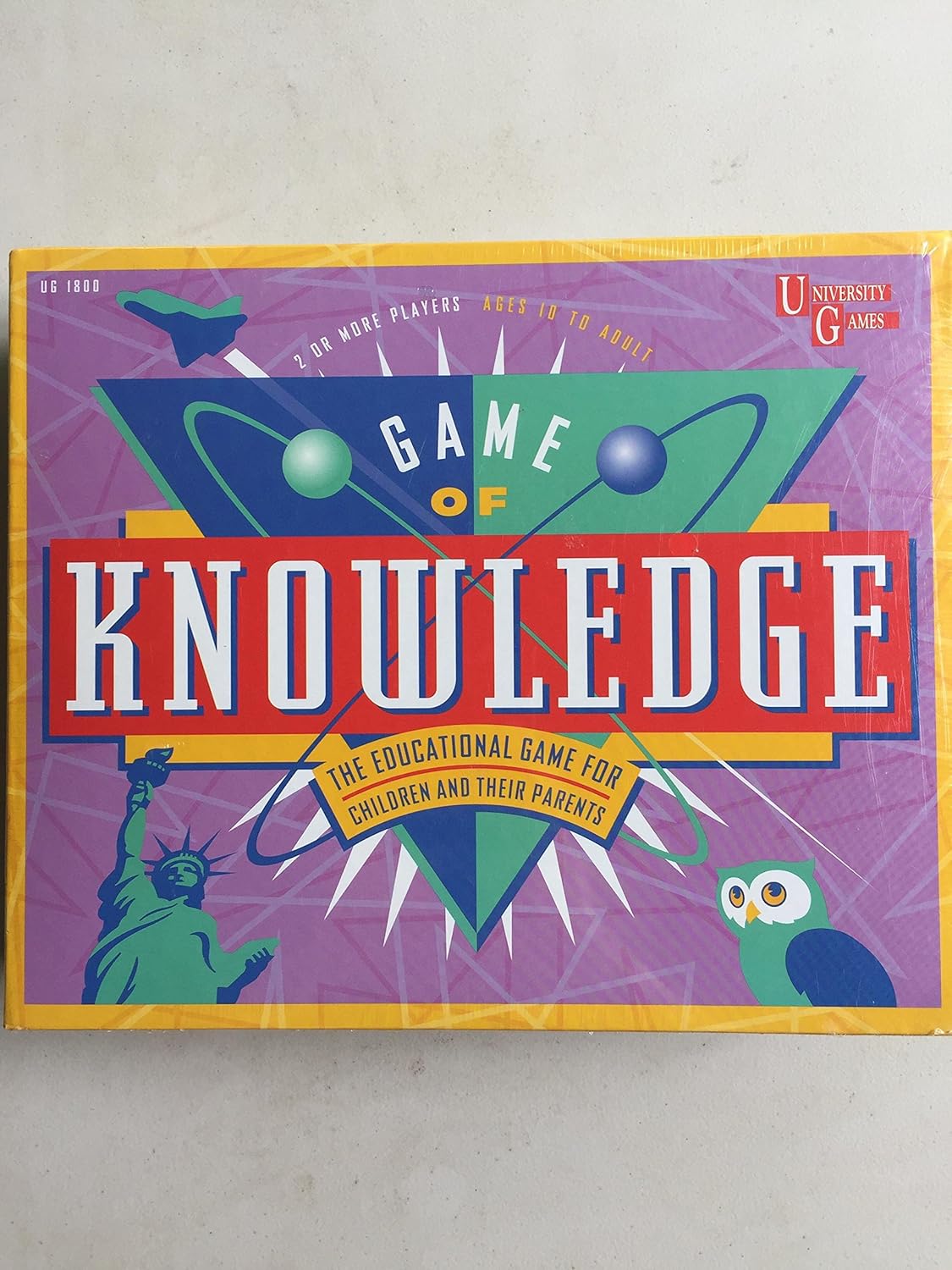
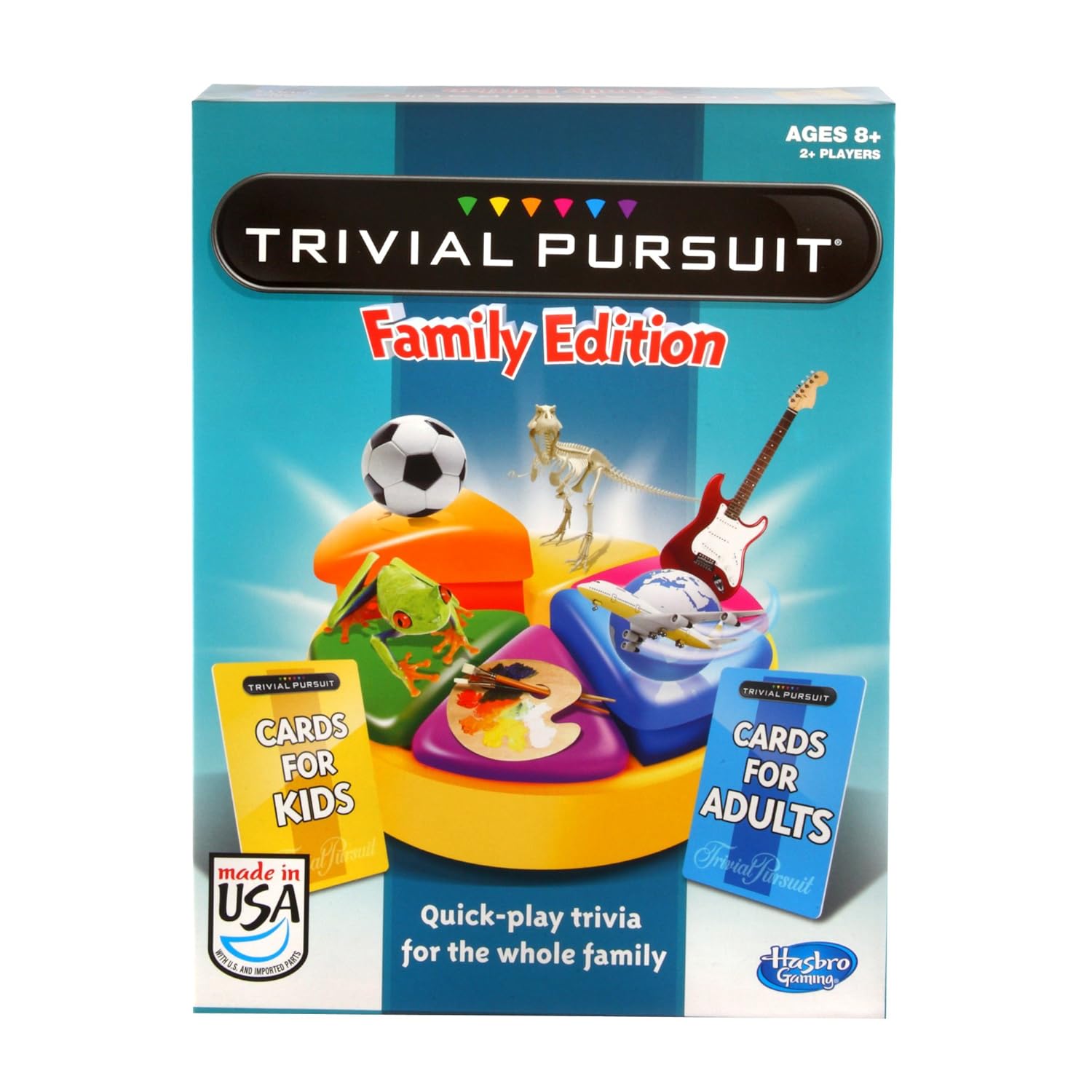
I used the “our world” question cards from the game below to inject some geography quizzing into the game since it was History and Geography Day. I wish I had noticed the age recommendation on the box, as it says “ages 6-9.” which I only saw while putting the cards away. The questions were too easy for my 10-15 year crowd. Oops, lesson learned! Always check the age recommendation on the box! In the future I will use the geography and history cards from the other game pictured below this one, or my Carmen Sandiego games.
Then I let the boys play football as a reward for listening better than they have been on previous days. I do “three strikes, you’re out!” If I have to remind them three times to keep quiet and/or pay attention during the read-aloud time then they don’t get football. We had our quietest day today so far! It’s because I was finally super clear that it’s not three strikes for each boy, it’s three strikes for the group of three boys. And it’s not just if they are talking that they get a strike, but if they are interacting silently with gestures or looks, which even though silent, distracts them from the story. I’m glad I’m seeing improvement in their behavior. These boys are doing better knowing they have a chance for some physical play outside after sitting quietly and listening. It’s important to give them that time, I’m realizing. Boys do learn differently than girls.
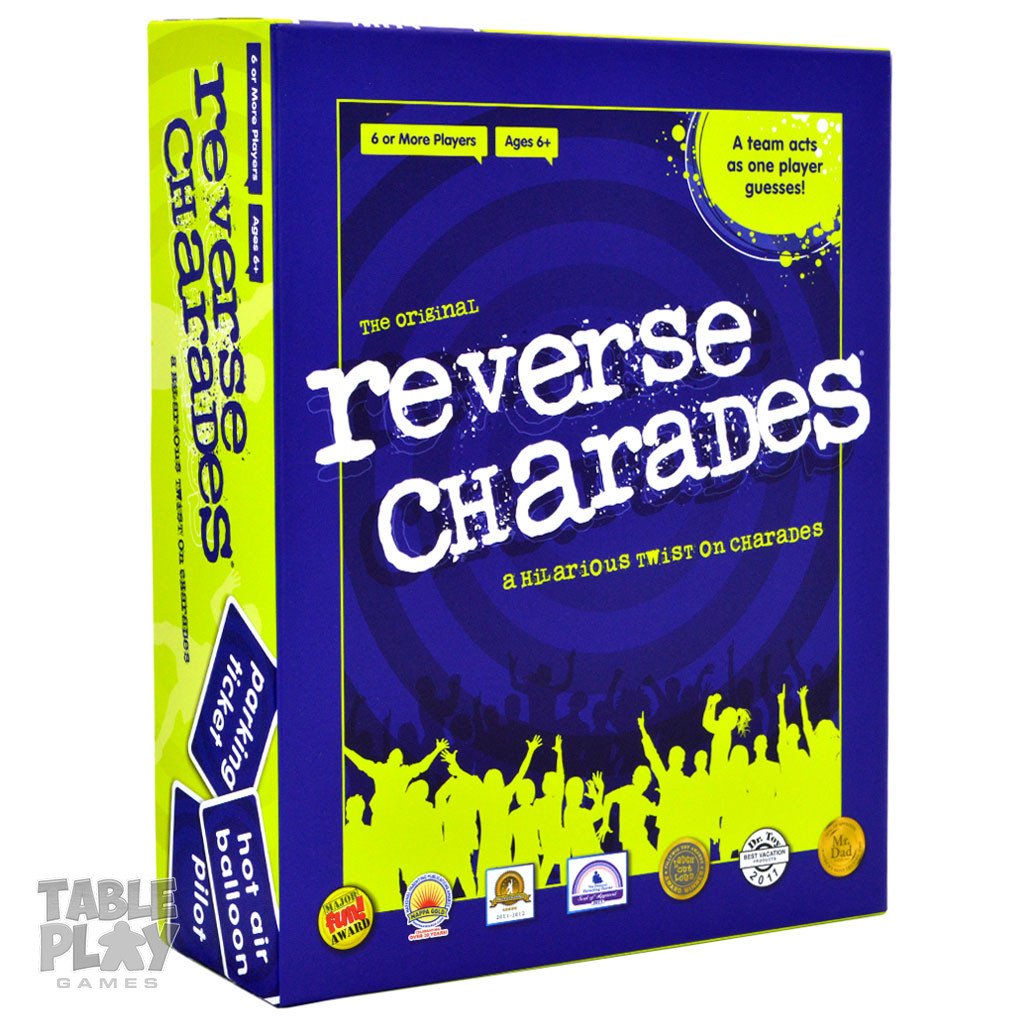
Most of the girls then played Reverse Charades. Another great filler game to expand to whatever amount of time you need to fill up.
Check out this PDF of my slides about the “what, why, when and how” of gameschooling. These are the slides I used for my presentation at the Winter Homeschool Conference in Layton UT. on Feb. 8. 2020.
Happy gameschooling! I hope it brings as much joy to you as it does to me!
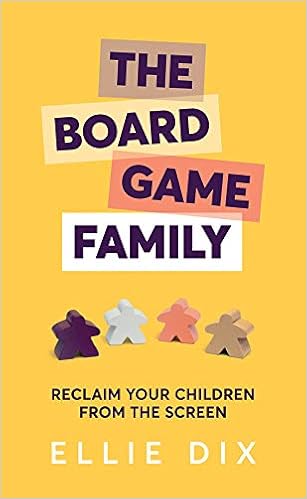
Game playing and gameschooling help you get your kids off screens. Yay! Here’s a great book about that:
You can buy it on amazon or read it for free by signing up for a free two month trial of scribd.com over here, using my affiliate link. Disclosure: If you do sign up with my link, I get credit for a free month. The cost is the same to you. That’s a win/win for both of us!
What is scribd.com? scribd.com is a collection of books, audiobooks, magazines, newspapers, and sheet music that you can access using an app on your mobile device. Much better than Audible, because you have unlimited access to all those resources for a low flat monthly fee. I have Audible too and love them both!
As I have delved into the Trim Healthy Mama world, I have been delighted to discover that the authors of the Trim Healthy Mama books, Serene Allison and Pearl Bennett, are the daughters of Nancy Campbell. When I was a young mama, I often read the online articles and email newsletters written by Nancy. She is the founder of the Above Rubies ministry. As an exhausted and overworked mom of three little children ages 4 and younger, Nancy’s encouraging words about being a wife, mother, and homemaker soothed my soul. My husband went out of state almost every week for 3 to 5 nights a week on business, so I had to do everything on the homefront while he was gone. I would put the kids to bed, recharge my batteries by reading Nancy’s words, among other things, and then go clean up the kitchen, around 10:30 PM! Fortunately, things have changed and my kids are old enough to do the dishes. They also do the laundry and clean the bathrooms, and help fix dinner. I have to credit the homeschool movement for putting people in my life who inspired me to teach my children to work.
Anyway, it was fun to find out that Serene and Pearl are homeschool moms! From what I can tell, the Biblical Christian worldview created Trim Healthy Mama, in my perhaps incompletely informed opinion. It makes sense to me. That worldview gives these ladies the confidence to write books about health and food, based on science, without degrees after their names. I believe that the Biblical Christian worldview these ladies were raised in gave them the confidence and work ethic to create their Trim Healthy Mama books and business.
This video shows Pearl and Serene introducing their husbands and kids.
Here’s a video of Serene and Pearl’s parents, Nancy and Colin Campbell, showing the power of turning a family mealtime into a family devotional and prayer.
Then a two part video series of the Above Rubies vision.
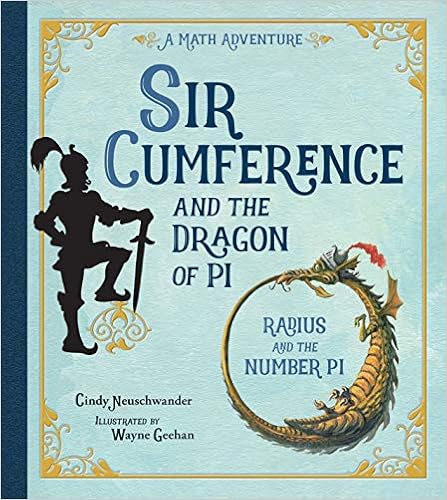
Tuesdays we do math, science, strategy, and the related skills of logical thinking involving deduction. In honor of upcoming Pi Day on Sat. 3/14 we listened to the above book in YouTube. Here is a summary of the book from Amazon:
For fans of the Sir Cumference series with Pi on their mind, here is the second installment in this fun look at math and language. This time the math adventure is centered around a potion that changes Sir Cumference into a fire-breathing dragon. Can Radius change him back? Join Radius on his quest through the castle to solve a riddle that will reveal the cure. It lies in discovering the magic number that is the same for all circles. Perfect for parent and teachers who are looking to make math fun and accessible for everyone.
Then we did a related activity from Bethany at mathgeekmama.com, from her list of Pi Day Activities, over here. She has some great ideas. I love the sing a long songs about pi, sung to familiar tunes.
The measurement activity that we did from that link, related to the Sir Cumference picture book, was hard for most of the kids (in our group we have ages 10 to 15). I was hoping to play the game she had listed but the kids couldn’t even get past the activity measuring different circles I gave them (lids, pie tin, cake pan, etc.) and understand the relationship of pi to the diameter and pi to the circumference. Some of them wrote down answers just to write down answers and say they were done. When I tested them with questions, they couldn’t answer correctly. So I’ll be working on teaching pi again another time.
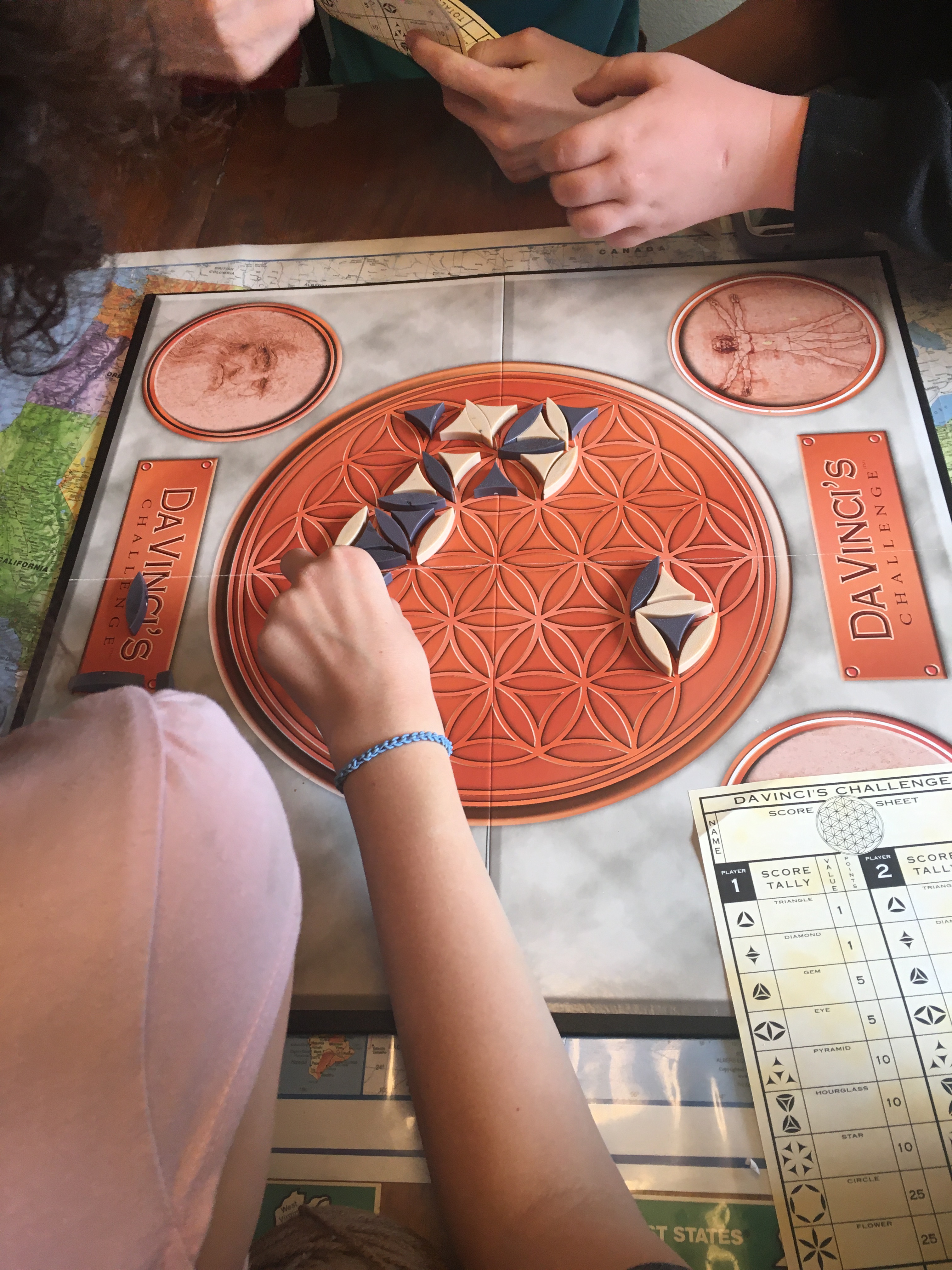
To lighten things up a bit we played Da Vinci’s Challenge, since it involves patterns that derive from intersecting circles, and pi relates to circles. It’s a 2 player game, or a 2-team game. You score points by making patterns that all come from “the flower of life” that Da Vinci used. I’m figuring what groupings would work best so to minimize the negative talk and competitiveness. We did girls vs. boys today and the girls won, because they completed a “star” pattern for 10 points that the boys didn’t even see coming. I’m going to play this with my husband for date night at home, it will be a lot more enjoyable with no arguing. Maybe we will do Bethany’s Pi Logic Puzzle as well. What a nerdy date. 🙂
That’s it for another day of gameschooling! We also made pie today in honor of pi. 😉 We’ll probably do it again on the actual Pi Day and sing the songs from the the mathgeekmama.com’s site I linked to above. They are clever!
If you want to know what else we’ve been playing, go here.
If you want:
-to get my presentation about about gameschooling, my slides turned into a PDF
-AND a PDF of how to build a gameschool collection on a budget
-and the link to read a free copy of The Board Game Family, go here.
Here’s a big tip for gameschooling: have theme days. This is how I do it:
Monday: Language Arts
Tuesday: Math, Science, Logic, and Deduction
Wednesday: History and Geography, i.e. Social Studies
Thursday: we take a break to attend our co-op school
Friday: Art (including Drama) and/or Music
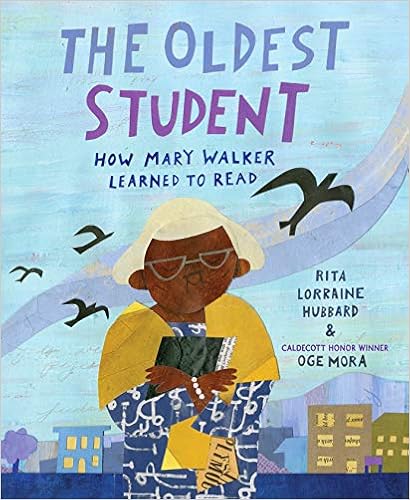
I like to pick a picture book and a game or games to go with those themes. So yesterday, Monday, Language Arts Day, we read the book pictured above, after listening to Maple Hill as an audiobook in Scribd. It’s an ah-MAAAZ-ing story about a woman who was born into slavery back in 1848, saw slavery end, and worked hard from dawn till dusk at menial jobs. During all those decades she never learned to read, until after she was retired from hard labor. She didn’t learn to read until she was 116 years old! Guess what book gave her hope? Yes, the Bible. I hope you read her story, it’s true and wonderful and so inspiring. After she learned to read, whenever she got lonely, which was often since she outlived her husband and children, she would read her Bible and not feel lonely anymore. So sweet. She died at age 121 in 1969. Incredible! What a reminder to all of us that one is never too old to learn. I also hope whoever reads it will feel grateful for the ability to read.
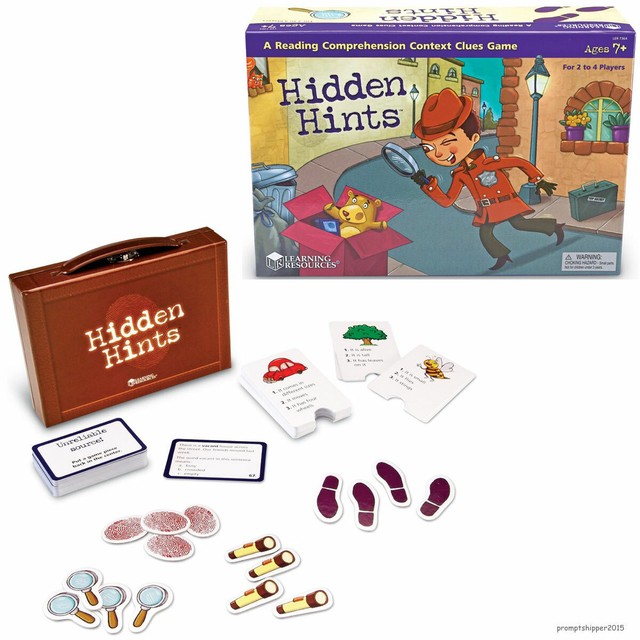
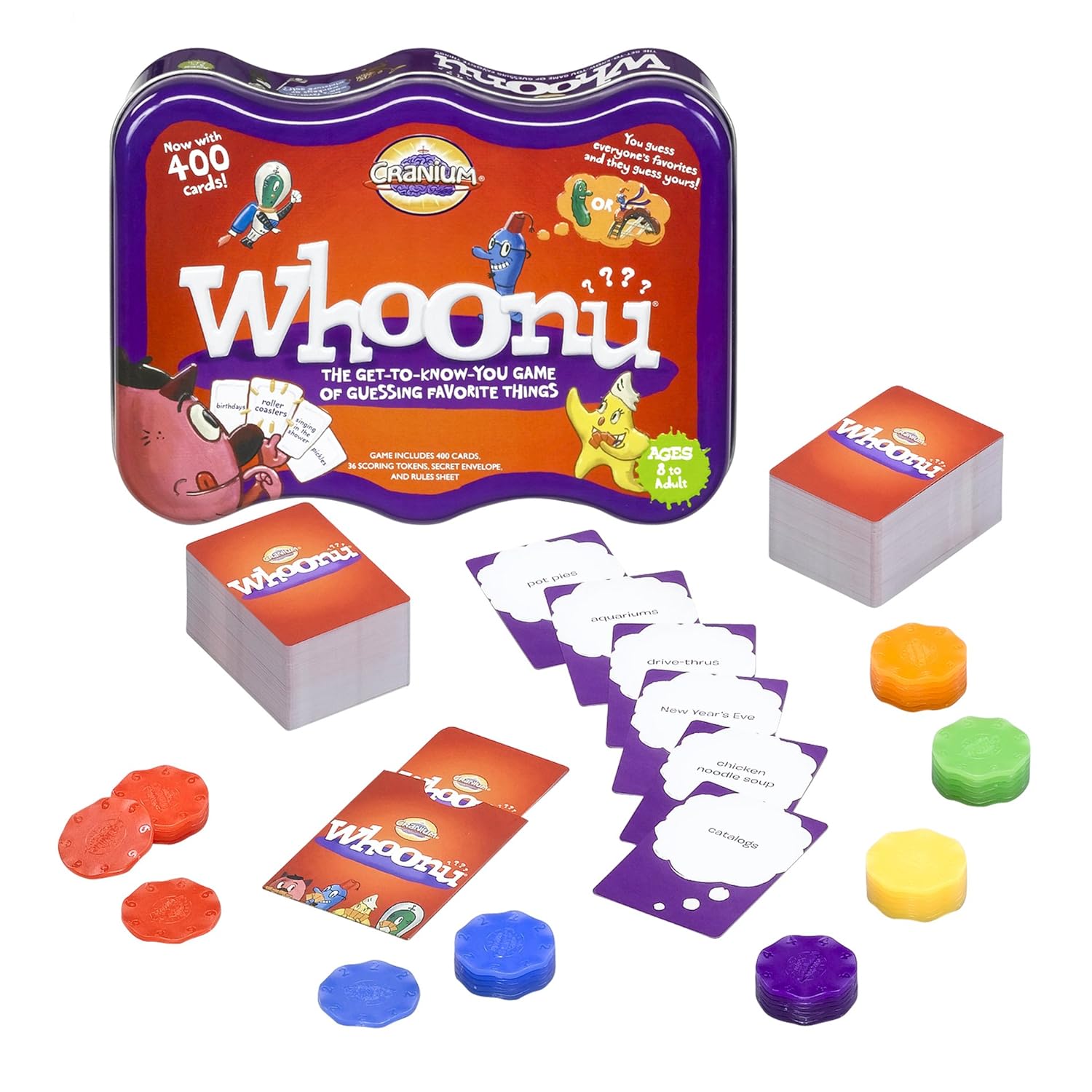
Then we played Hidden Hints and Whoonu. Hidden Hints is more for younger students, I’d say ages 7-12. It was too easy for the older 12s. Hidden Hints is all about reading comprehension using contextual clues. A fun game but I’ll save it for a younger crowd.
Whoonu is one of the best games ever, because everyone plays at once, and you get to learn about each other. A great getting-to-know-you game. I’m so grateful I scored it for free at my girlfriends’ yard “giveaway” instead of yard sale. Actually just the girls and moms played the game today. I sent the restless boys outside to play football. I also love the game because you can have it be as short or as long as you want. So it’s a great filler game when you have some to fill up. I love it!
Another gameschooling day in the books! If you want to know what else we’ve been playing, go here.
If you want:
-to get my presentation about about gameschooling, my slides turned into a PDF
-AND a PDF of how to build a gameschool collection on a budget
-and the link to read a free copy of The Board Game Family, go here.
So last week, on Thursday, after the Wednesday full of cheating in Secret Hitler, I took the kiddos on a trip to the farm of some friends to see their “Georgic” lifestyle. It was the first day I let my 15 1/2 with a learner’s permit drive for the whole route. My nerves were up to it and it was mostly country driving so I could handle it. I usually let dear husband be the driving coach but he wasn’t with us. We all got there in one piece, including the car, but on the way home he hit the neighbors’ mailbox. Fortunately no damage.
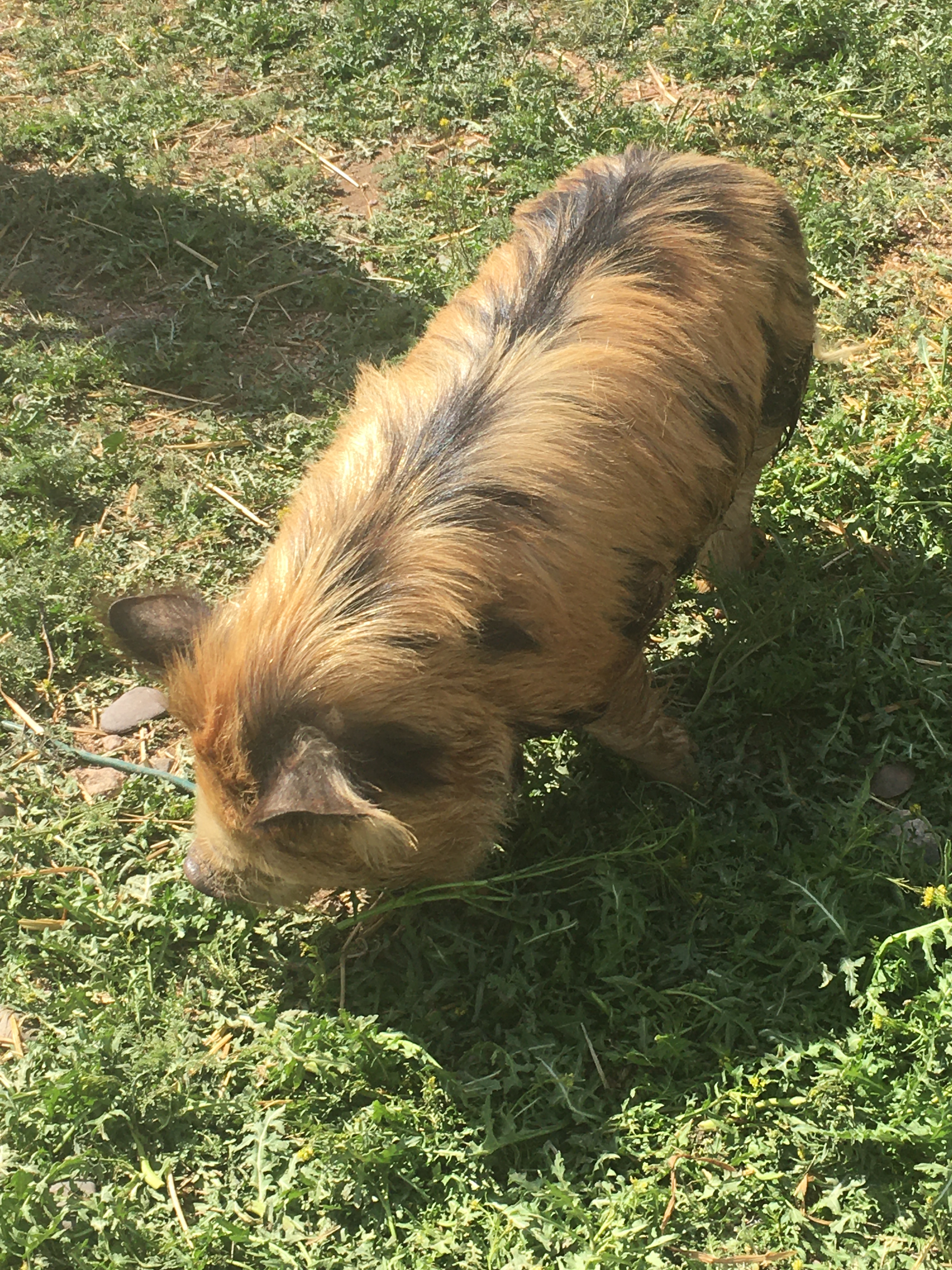
“Georgic” means having to do with being a wise steward of the earth. It’s the name of a LEMI Scholar Project my two teens are studying in our homeschool group. We had a wonderful time observing this family’s ecosystem of the birds, goats, manure, dirt, grass, chickens, carbs, proteins, and the end to inflammation. It’s all too complicated to explain here but if you are into science and agriculture you might understand what I’m talking about. I loved seeing Isaac the pig gobbling up the grass, as seen in the photo above. Isn’t he cute, in a piggy way?
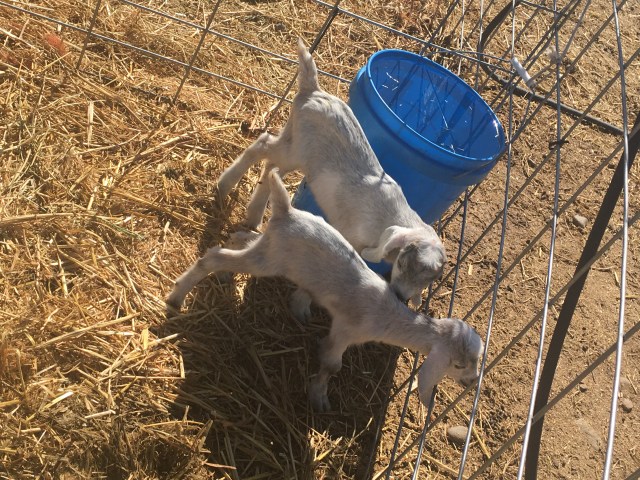
The farming family had twin baby goats born earlier that week so it was delightful to see such new life wobbling around.
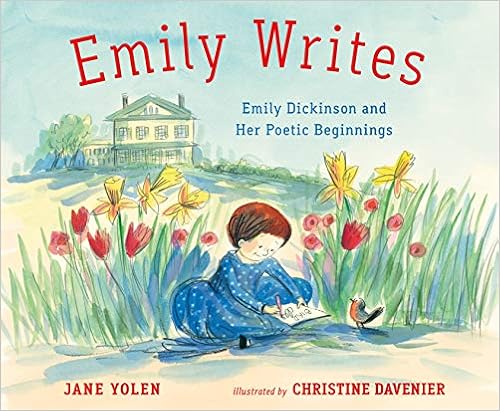
We played a game that night with just my kiddos but now I don’t remember what it was. I also read the above picture book to my 10 year old for a bedtime story. Very sweet! I just love, love the dreamy watercolor/colored pencil illustrations, especially the flower endpapers. On Friday we listened to more of Miracles on Maple Hill.
What a nice book to accompany our field trip! Someday I want a little farm like their’s but I am so not there yet. I am still afraid of chickens.
Then on Friday I got to play some music games in the morning for gameschooling. See above and below. I had just picked up Carpool Karaoke that morning at Goodwill for only $2.40 so I was thrilled to find another music game. It looked like it had been barely used. The game just got released last year. On Fridays I like to do either art or music games. Then I had lunch, exercised, attempted to correct schoolwork but ran out of time, and then left to go to my Moms’ Retreat for my homeschool group of mamas. It was a wonderful day and a half of estrogen-charged connection. Here are the games we got to play before I left:
The kids weren’t comfortable enough to super get into this game. Most of them are 12 and older so they have the ability. They were too inhibited and would not “own it/rock it.” I could foresee problems with them judging them each other and being rude so I turned it into a cooperative game. The six of them were all on the same team and the two moms were the judges. I challenged them to see if they could get 20 points in 30 minutes. That was much too short of time. In the future I will give them an hour. I can foresee this would be a super fun game if you have the right crowd. I want to play it with my adult children for one of my online family game nights. Can’t wait! Since the mentors of Shakespeare Conquest class teach the students to “put their pride in the bag,” it would probably be a great game for that LEMI Scholar Project.
See the video at the very top to learn how to play. Hey, my oldest son was at that very game convention last fall.
We also played Spontuneous, one of my very favorite party games. I love that everyone can play all at once. I’m hosting an adult game night this Friday and we are going to play it. It’s also one of my thrifting treasures that I scored for $2.99 at Goodwill last fall. Once again, my country loving music son, the learner’s permit owner, won, with his vast knowledge of lyrics. I can’t wait to play it with adults this weekend! If you ever get a chance to snatch it up, get it, you won’t regret it! So far I have played it about six times, two times with just adults, and loved every minute of it.
Have you been wondering how to follow President Nelson’s admonition to study the restoration of the gospel in order to prepare for General Conference this April 2020?
One way is to watch the above video. Then ponder in what ways you have heard God the Father, and write about it. Then ponder what ways you are seeking to hear Him, and write about that. Then approach General Conference with those questions in mind, with a prayer, and write the thoughts that come to you after Conference regarding those questions.
Here are some more videos to watch. These three videos below by David Butler are so incredibly funny, engaging, and insightful.
Emily Belle Freeman has a Countdown to Restoration Advent here on ldsliving.com. I love how she has a theme for each week, and then within each week she has an activity for each day.
Then there’s this study guide here from agospelcenteredhome.com.
I have directions for making a Gospel Restoration Timeline Card Game here.
I hope those don’t overwhelm you. Pick what works for you and enjoy! Personally, I’m barely having my family keep up with the Come, Follow Me study readings and questions. I may just do Emily’s Restoration advent on my own and then share what I’m learning with my family at mealtime.
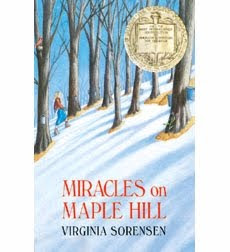
Today was History/Geography Day for our gameschooling. So that means we use that theme for our book(s) and our game(s). I always like to do a biography on this day, in addition to our regular read aloud chapter book. We are still making our way through Miracles on Maple Hill, which is our daily read aloud chapter book. It’s a delightful book all about stewardship in nature and community interdependence. You can listen to it in YouTube, but the end of Chapter 5 is missing. You can listen to it intact in Scribd.
On Wednesdays, for our History/Geography theme, I like to read aloud a biography for children, after I do the regular read aloud chapter book. So today we did Mr. Rogers, using the above book at the top of this post. We are doing 3-4 chapters a week, every Wednesday. The chapters are short and have lots of illustrations. Wow, Mr. Rogers, what a rare national treasure. He’s a wonderful example of how when you live your Christian values, and persist even if people make fun of you, you will eventually get more recognition for being nice, even if it’s after your death. I love his posthumous popularity. When I was a teen, it was cool to make fun of him, but now it’s cool to pour on the accolades about him. He didn’t change. So what’s the deal? Why do people think he’s so cool now? He should have been cool then. Shows how fickle people can be.
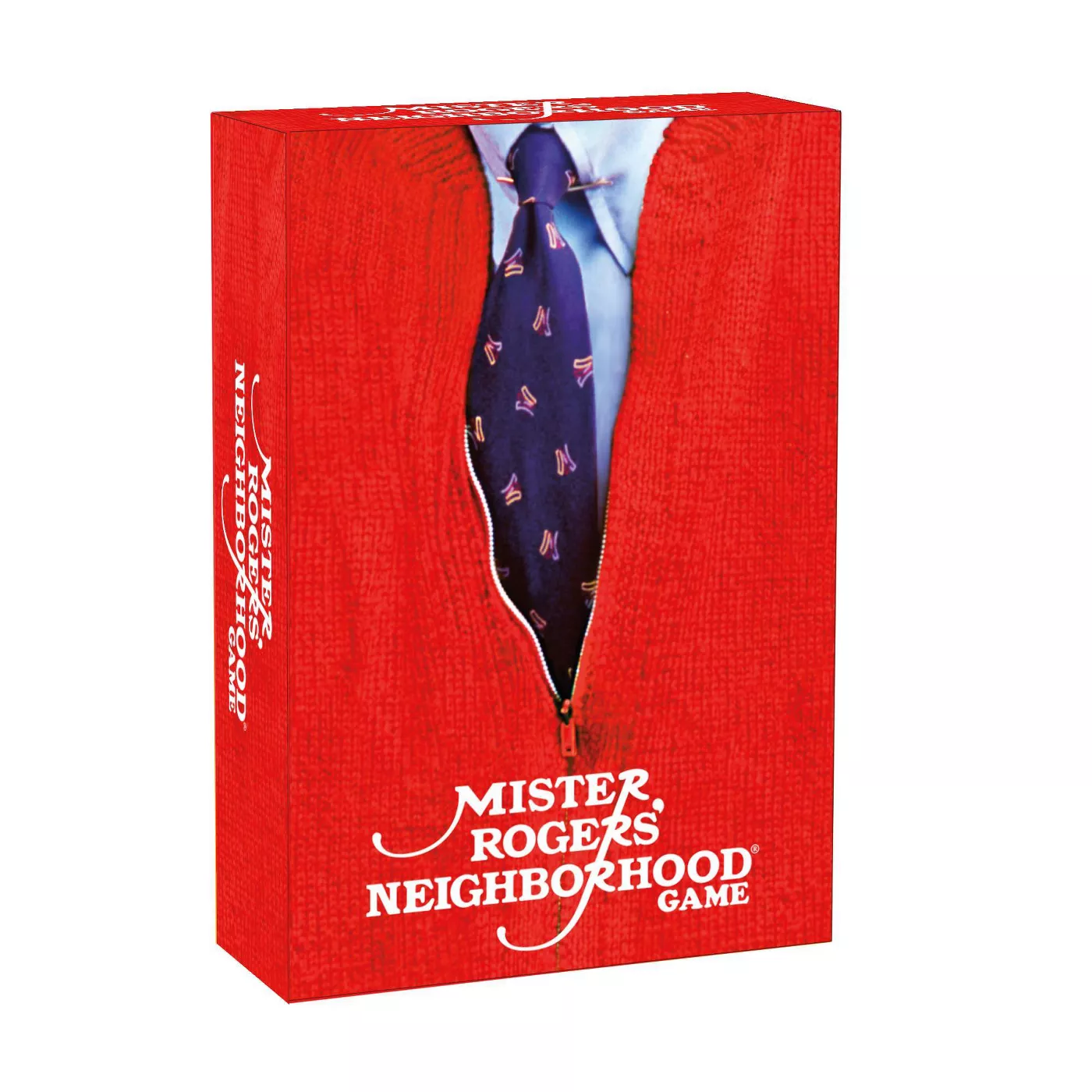
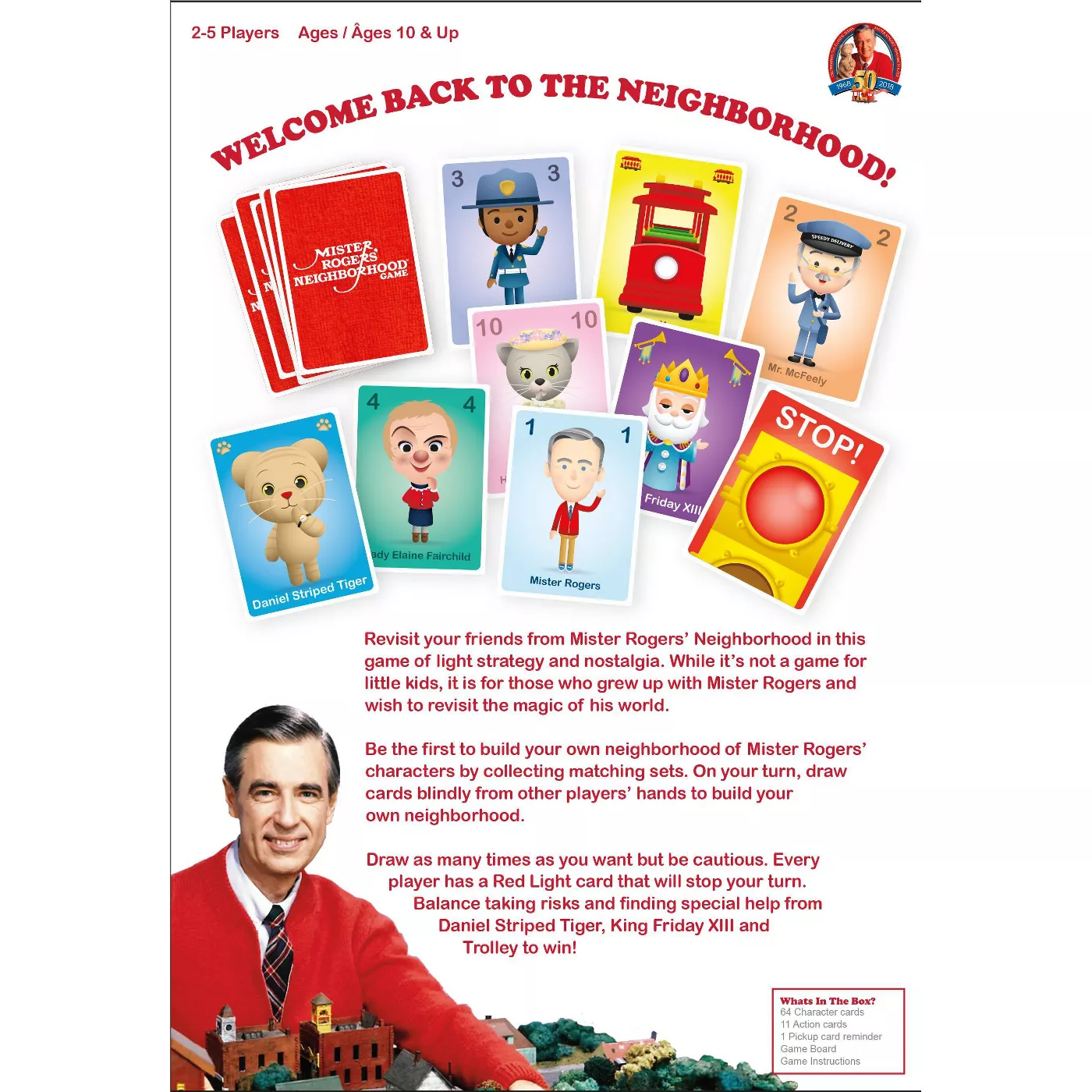
Anyway, then we played this game:
Oh I wish! Not really! I just discovered this game two days and now I’m drooling over it. That would have been wonderfully synchronous to play it. I don’t have the Mr. Rogers game yet, but now it’s on my wishlist! I just may save it only for the adults though. The back of the box says it’s more for my generation because of the nostalgia involved.
For our gameschooling, we really played Where in the USA is Carmen Sandiego? pictured below, and Secret Hitler, for our History and Geography games of the day.
I’m working on getting the kiddos to like the Carmen Sandiego game. They just don’t appreciate how long in the making this game was for me. I picked it up used at a thrift store years ago before we moved. After the move to AZ, it sat unused for four years. Just a few months ago, when I went to use it for our gameschooling, I discovered the board was missing. Ugh! After much looking in the house and then searching online for a download soft copy, I resigned myself to having to find a hardcopy on ebay. My dear husband granted my wish and got it for me as a Christmas gift. Yay! That shows how much of a nerd I am, LOL, that I want a used Carmen Sandiego board game for Christmas. I like the quiz aspect of it about US geography, US landmarks, and that it uses memory skills as well. The game started as a software game, then evolved into a TV game show, then a board game.
You play the first round answering US geo questions and remembering where certain cards are to catch the crook with the matching warrant, loot, and crook cards. Then to catch Carmen Sandiego the whole group has to correctly place capital city tokens on the USA map board. I think it’s fun but the kids not so much. Maybe they are just spoiled by flashier games? It just brings back nostalgia for me of long winter days being home as a new young mom with one and then two little babies. I would watch the PBS Carmen show for fun and intellectual stimulation on dreary afternoons. Please be nice to young moms. They are often cooped up too much! This was in the Stone Age of the mid 1990s before I had the Internet accessible in my home. 🙂 (The show is actually Where in the World is Carmen Sandiego, not the USA. I have both versions of the game and plan on playing the world one soon.)
I also love the Rockapella group from the show. They sang amazingly! Oh how I love those a capella vibes.
The Millennials in the video below are just too young to know the song. Too bad Sean Altman didn’t interview middle aged people like me.
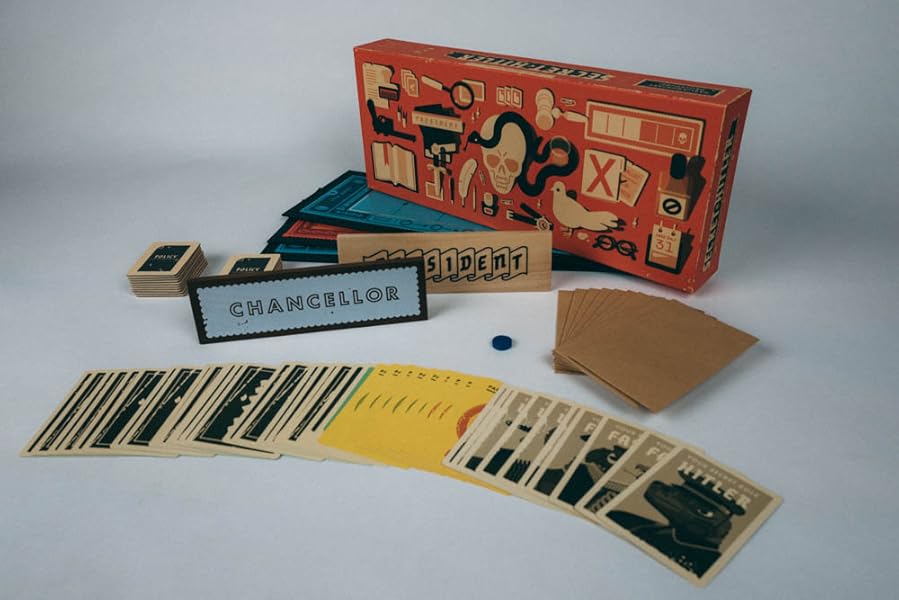
How I digress! Anyway, the Carmen Sandiego game was like the “vegetable” the kids had to eat today and Secret Hitler was “dessert.” Secret Hitler is probably my children’s overall favorite board game. It is a social deduction game with subtle history and political lessons, as it simulates the climate of pre-WW2 Germany when Hitler rose to power by first being chancellor and then president by gaining favor among his fellow fascists. My children love it for some reason. Probably because of all the sneakiness.
It is similar to the board game Avalon, where you have secret roles and you are trying to figure out who is who so you can foil moves. My firstborn, age 26, asked for it as a Christmas present a few years ago so I obliged. Every time he returns home to the nest, he brings it and they all have a grand time playing it, even on Christmas morning, Christmas Day, the day after Christmas, and New Year’s Eve. That’s how much they love it! I’m still figuring it out. The more I play, the more I enjoy it. I just seem to have a hard time adapting to games involving lying/acting.
You can get your own free copy of it over here. Just download, print and play! It is black and white. If you want to be fancy, color it like below, with the fascist boards blue and the liberal board reddish orange.
photo credit: amazon
I think we all had fun playing it this morning, even though the metagame wasn’t the true metagame it could have been because it turned out my two sons colluded/cheated and dealt out the Hitler card to one of them, one fascist card to the other of them two, and then the other fascist card to the other boy of the group so they could all collude. It’s supposed to be random! So that’s the last time I let either son deal out cards for a LOOOOONG time. Or let them sit together.
Note: “Metagame” is the “game behind the game” which involves the people’s personalities, emotions, and their sportsmanship.
So what to do when people cheat in board games? in this case, what I’m doing is not trusting them for a long time. They just lost the privilege for any type of leadership role in a board game, including dealing. They get to earn all of our trust back. Here’s what Ellie Dix, author of The Board Game Family, says to do about cheating:
Don’t leave one person to do all the setup on their own. Reduce the opportunity for cards to be ordered and resources to be manipulated before the game starts.
Make it harder for players to cheat during the game. Place pooled resources and banks well away from individual players’ boards, ideally slightly higher up (maybe on top of the box) and in full view of all players.
If you suspect cheating during a game, pause and take a few moments to review the rules. Make sure it is really clear what qualifies as cheating and what behaviours and moves are acceptable.
Avoid playing games that use mechanisms like rolling dice behind a screen as these rely on honesty and manipulating the outcome is too tempting for some.
Make sure that there is no extrinsic motivation for winning. Neutralise the reasons why they might want to win as far as possible. Make sure you’re praising brilliant play of the metagame and clever moves, rather than only rewarding the winner.
Take time to talk to the culprit individually away from the game, possibly afterwards or even on another day. Avoid using the term ‘cheating’, but ask them why they felt the need to manipulate the results. Find ways to remind them about good gamesmanship and make sure you recognise their excellent choices in the next game.
If necessary, declare the game void because you’ve noticed cheating. Don’t openly state who you think the offender is, but remember to follow up later on. Then move briskly on to a different game.
That’s from Chapter 5 of The Board Game Family by Ellie Dix. You can read it for free if you sign up for Scribd here. I like how she concludes the section on cheating where she says that if you let the “metagame” kick in people will see how enjoyable that is and eventually stop cheating because they won’t have a need to cheat. I think by that she means that when you let people experience the metagame involving true gamesmanship or sportmaship they will enjoy it. They will learn that it’s the experience of the game with people acting honestly with skill, by giving a great “go at it” or “the old college try” (the metagame), and not the victory, that is really enjoyable. The older son, the ringleader, expressed a belief that if you aren’t a fascist in the game, it’s not fun. Aha! So somehow I’m going to figure out how to create a situation where he enjoys the game without being a fascist, by enjoying the metagame. Here’s Ellie below explaining the metagame.
Which brings me to my next questions. Why do we always say someone is a “good sport” or “a poor sport” and not just a “sport”? What exactly is a “sport” in the form of a person, not a dog or a cute little boy? How come “sport” used to be an affectionate name for someone but now we hardly hear it used without a qualifier? This definition here says a sport is “a person who behaves in a good or specified way in response to teasing, defeat, or a similarly trying situation.” So why do we need to qualify a “sport” with the word “good” nowadays? Has our language deteriorated to only saying someone is a good sport or a bad sport because a plain sport is hard to come by? Has our language deteriorated as a reflection of a culture losing the values of living and playing fairly?
Disclosure: the link to Scribd is my affiliate link. If you sign up for Scribd, you can get two free months. The cost is the same for you and I get another free month. If you are a bibliophile like I am, you will love it! It gives you unlimited access to thousands of audiobooks and books in text format, more so than Audible. I have Audible too and love both platforms.
I love the above book because of the fun cheery illustrations that give a nod to illustrator Jan Brett’s trick of putting a hint of what’s going to happen on the next page with a small image. So engaging!
We are also listening to Miracles on Maple Hill. The perfect story for this time of year, because it’s about winter giving way to spring. We do a chapter a day. The YouTube version cuts out at the end of Chapter 5. So now we are listening in Scribd. Sign up with my affiliate link and you can get two months free.
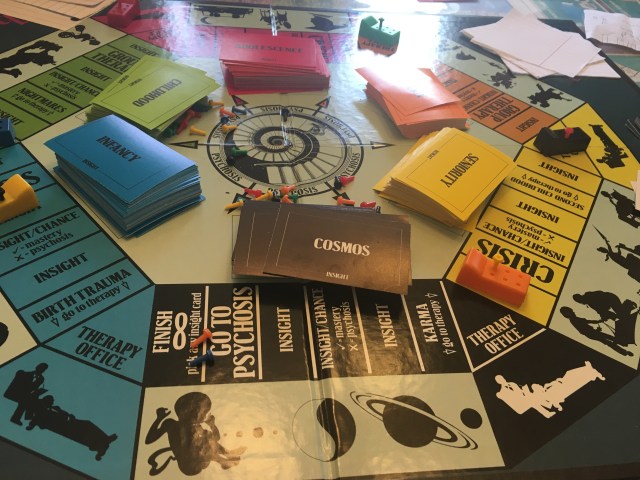
For our game, we played Therapy, my wonderful thrifting treasure that I found last month in Utah for only $1.50 after getting nostalgia and thrifting envy over it. (You can read the backstory about that here.) The metagame involved did not go over well. The “metagame” is the game behind the game, involving the players’ personalities. We had too much drama with that today with trickery, lying and irritation, so…yeah, we probably won’t play it again among this homeschool group of mine. I’ll save it for playing with my big kids who are out of the nest and other adults. I found out it has an updated version here. I highly recommend it for kids who appreciate psychology and won’t argue about the answers or try to trick the other players. (One more thing…if you do get this game, you might want to screen all the cards first and take out certain cards so the game is G-rated and not PG-13.)
Disclosure: I do get a free month of Scribd if you sign up with my affiliate link.
I’m back sharing a book and a game a day that I’m doing for the #abookandagameaday challenge from thewaldockway.com. For the record, I’ve been playing a game (usually more than one) and reading a book a day for every weekday of the New Year, except for Friday February 7 when I was in Utah away from my kiddos. Last month I got in a time crunch with some other deadlines so I gave up blogging about our books and games each day, I’m hoping to do better at tracking here on the blog this month of March. It has brought much joy to my life! Yay!
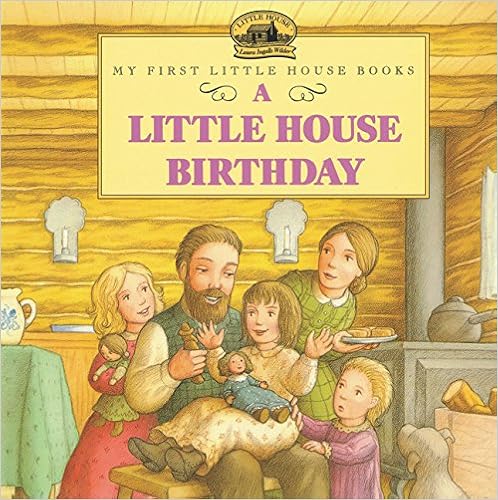
Today I read aloud the picture book above based on the Little House books by Laura Ingalls Wilder. I love this series of books, which capture the essence of the Little House chapter books in picture book format. This one is illustrated by Doris Ettlinger, in the style of the original illustrator of the Little House books, Garth Williams. I love her simple, innocent, sweet illustrations. Her style is similar to Renee Graef, who illustrated other Little House picture books. (Truth be told, I can’t really tell their illustrations apart, they seem identical.)
So we talked about Laura Ingalls Wilder a bit, with her birthday being last month, which I’m sad I missed celebrating, because of my trip to Utah, and then we played Letter Jam and Say Anything.
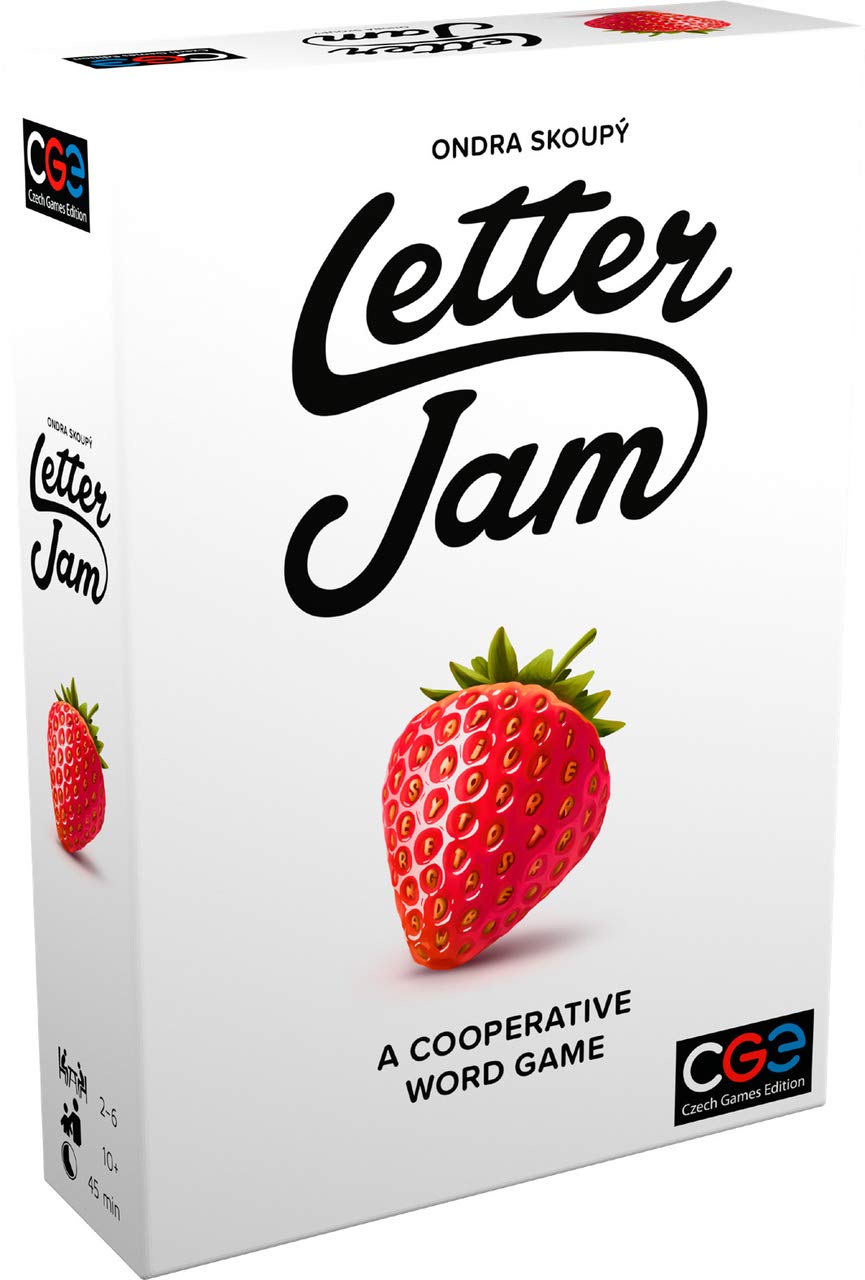
The first was Letter Jam. This was the second time I’ve played this game. My oldest child, the biggest game playing fan of all us, gave it to me last Christmas, after seeing it debut at a board game convention. It’s absolutely delightful! The first time I played it was two days after Christmas, with my children. I highly recommend that you not play this game on a tablecloth, like we did that time. The tablecloth swallowed up one of the tokens which caused me to miss one of the clues, so that totally foiled my deduction of my secret word. I felt so frustrated!
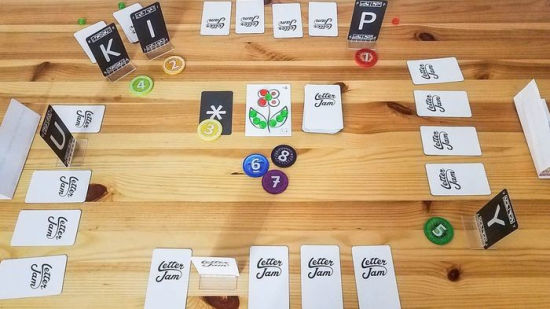
In this game, everyone gets a secret word, spelled out with letters on cards. Everyone can see the letters of all the other players’ words, one at a time, but not their own. You work cooperatively as a team to give each other clues about each others’ letter by using some or all of the letters displayed to spell a word. The pool of letters is constantly changing. It’s a lot of fun! Two of my sons didn’t like it however. One because he didn’t completely understand how it worked. The other son guessed his word and then mentally checked out, not wanting to participate anymore to help other people figure out their words by giving clues. I reminded him that the game is like life, where you only win by helping other people win. In the words of Elder Dieter F. Uchtdorf: “the only way for you to progress in your gospel adventure is to help others progress as well.” Just substitute the word “gospel” with “game” and you perfectly describe this game. We only played with three letter words, which I highly recommend for doing with kids and/or beginners. I’m looking forward to playing this at my next Adult Gameschooling Night or Game Date Night with Adults that I host at my home. It will be more fun with adults who aren’t bickering and don’t get flustered with long words. 🙂
Photo credit: barnesandnoble.com
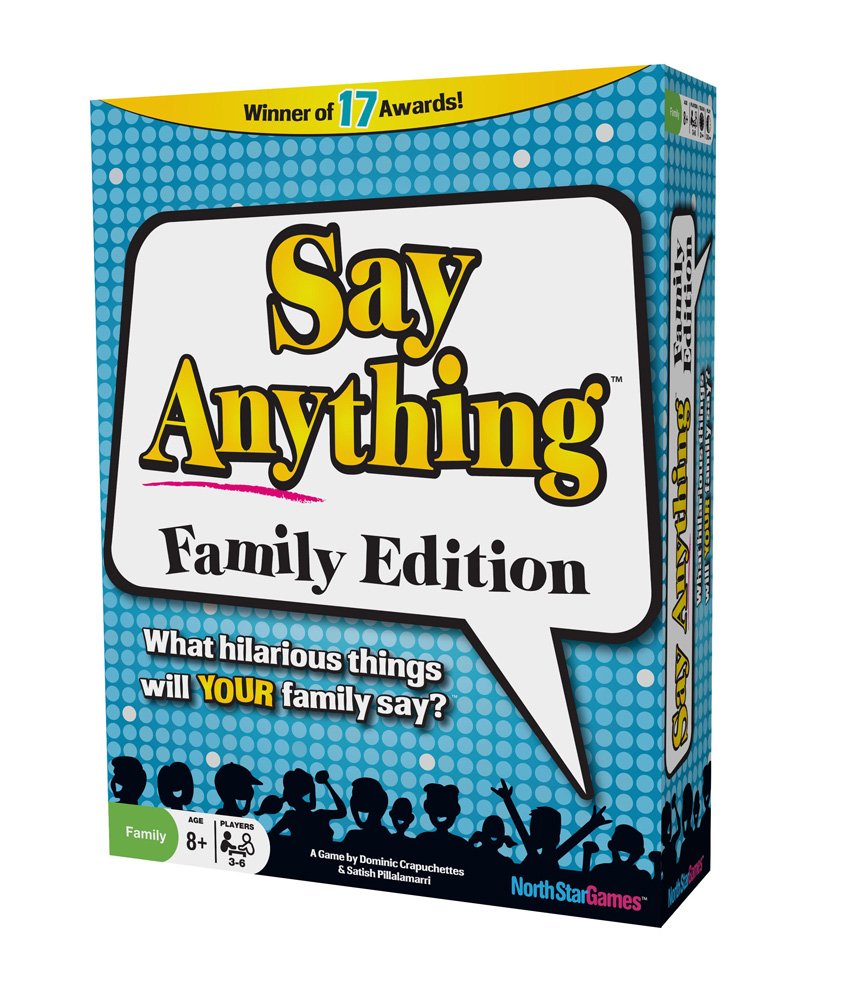
Then we played Say Anything Family Edition. This is probably the best party game ever! It involves questions, but they’re not trivia questions. These are questions to get to know other people better. So you win according to how well you know the other players so that you correctly predict their opinion, and how well you can read body language, to see if you can tell if other people know the answer. You also win by writing creative answers. Such a clever idea!
So if you are in the mood for a game, but don’t want a game that involves a ton of strategy and hardball thinking, then pick Say Anything Family Edition (apparently the non-family edition can get more risque with the questions). I picked it last week for Family Night when I wanted something to encourage sociable feelings and wanted to relax and not strategize. It fit the bill perfectly! It’s similar to Wits and Wagers, which I played with my parents and son, over here on my last visit to Utah, but instead of using questions that involve numbers for the answers, you use questions that involve the players’ opinions. I love it! I will be playing this one again and again! I scored by getting it used while thrifting, for $2.40 (20% off the $3 price with my teacher discount at my local Goodwill). Sweet!
I’m also feeling awfully pleased with myself that I correctly predicted the metagame workings that might happen with Say Anything. The metagame is the game behind the game, the game that involves the player’s personalities and feelings. I learned about the metagame by reading Ellie Dix’s The Board Game Family, which I preview slightly over here, the fourth paragraph down, and give you a link where you can read it for free. It’s really important to watch what is going on with the metagame and use that intel to improve the next iteration. Watch the video of Ellie below to learn about it.
Based on previous metagames with my group, I knew that some of the kids would not vote for certain other people’s answers if they could recognize handwriting on the dry erase boards, so I had each player write their answer on slips of paper and then my mom friend and I each copied the answers onto the dry erase boards provided in the game. Sure enough, during one of the rounds, when a certain player found out that a certain person had written a certain answer that she ended up choosing, she wanted to recant her vote! Of course we wouldn’t let her and the original vote carried. Everyone had fun, whereas if I hadn’t had inserted that piece of the game where we didn’t show their handwriting, I think there would have been some arguing. So if you have personalities that clash, I highly suggest you use slips of paper, and then copy the answers onto the little white boards. If you want to save the time of having to rewrite the answers, then just read out loud the answers with numbers attached, and have the kids vote for the numbered answers, writing the the numbers on the white boards, maybe with a keyword.
Happy gameschooling everyone! Here are more ideas, including how to build a gameschool collection on a budget.
Happy Leap Day! It’s almost midnight and I can’t let this day pass without recording the classics we enjoyed this month of February 2020. If you want to know why I love reading classics/”the best books” so much, go here.
First comes a book I just started reading this past week. I discovered the above book by the prophet and president of The Church of Jesus Christ of Latter-day Saints, President Russell M. Nelson, many months ago when surfing the Internet. I requested it through my public library’s interlibrary loan system. I never did get the book so I figured that it just wasn’t available in any public library. Imagine my delight when I went to pick up our books on hold at the library over a week ago and this book was there on shelf, under my husband’s name. He had requested it through ILL and never told me. Somehow the request went through for him. So I’ve been enjoying it! I love the stories in it. I’m not done, but so far I love it. I think God gives me big assignments, but they are so small compared to being asked by God, through President Benson, to establish the Church in all of Eastern Europe starting in 1985, and after the fall of the Berlin Wall. That was President Nelson’s charge, and I’m happy to report he fulfilled it.
He tells stories about that in this book. My favorite story is about the young mother, Svetlana, who lived in Russia and was searching for Jesus Christ. This woman left her homeland to go to Finland in search of Jesus. As she was walking through a public park in Finland, she found a book hidden under some fallen autumn leaves. It was the Bible, a testament of Jesus Christ, written in the Russian language. She exclaimed joyfully about her blessed discovery, telling another mother in the park about her providential fortune. This other mother happened to be the wife of the mission president for the Church of that area, Sister Raija Kemppainen. Sister K asked her if she wanted another book about Jesus Christ, written in the Russian language and Svetlana said yes. So Sister K. gave her a Russian Book of Mormon, and Svetlana eventually got baptized and took the gospel with her back to Russia. I just loovve this story, as I fell in love with the Russian language while studying it for three years in high school. I love the Russian people and hope to go to Russia to minster to them with my husband as missionaries when all the kiddos are out of the nest.
Next, here’s one of my most exciting new books, above. I love it! It fell into my lap while I was in Utah, the night before I presented about gameschooling (using board games to homeschool) at the Winter Homeschool Conference, while looking through my Scribd app. If you haven’t heard of Scribd, I recommend you check it out. It’s a subscription membership for bibliophiles, which includes an app, much like Audible. You pay a flat fee around $10 a month, and then you can download unlimited audiobooks and digital books in text format through the Scribd website or the Scrib app. So amazing! You can sign up for a free 60 day trial through my affiliate link right here. The cost is the same to you if you sign up through my link or not, and I get a free month if you sign up through me. Win-win!
I love the above book because author Ellie Dix tells why board games are so full of wonder and bonding for you and your family, how to deal with the pitfalls of game-playing, such as tears, tantrums, poor sports, and the “meta game,” which is the mysterious, insightful life “game behind the game” as the players interact. So interesting! Read it in Scribd.
The above one is my latest fave picture book. Such a clever story and it promotes the values of stewardship and community interdependence.
I’ve read other books about Mr. Rogers but this is the first one for kids I’ve read. Nice. It shows all the elements that came together in his show early on in the very first two chapters.
This one is one of the best books on friendship! A new Celestial Family Tradition read-aloud for February to go with Valentine’s.
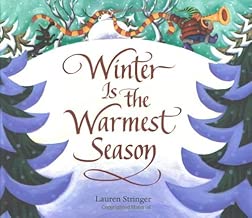
This is my new favorite picture book for winter. It totally gives me ideas/excuses for slowing down in winter and playing up the coziness.
Another great one on friendship, thanks to reader Sarah Eastley who recommended it on my sister’s blog. Thanks Sarah! I like the idea that friends can be what seems like unlikely pairs (a frog and a dog) and the “circle of life” reference. So sweet!
It’s a Celestial tradition to read the above book every winter.
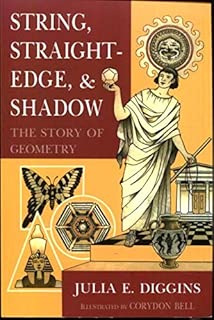
The top and below one are for my two teens’ math and science class for the homeschool co-op. I listen to the one below in Audible. It’s helping me to remember I learned this stuff in college and how it all fits together.
On audio, on the way to homeschool co-op once a week. We finally finished! I had forgotten all the funny lines. The wedding at the end is so enchanting, and no, it’s not Anne and Gilbert’s. I read all of L.M.’s Anne books as a teen, so it’s a ton of fun to share the stories with my kiddos. I’m determined they shall have as much of Anne as I did!
The kiddos listened to Anne or this one while doing dishes if I can’t read aloud.
I’ve been listening to the one above since October and the one below since January, because I only listen on the way home from co-op.
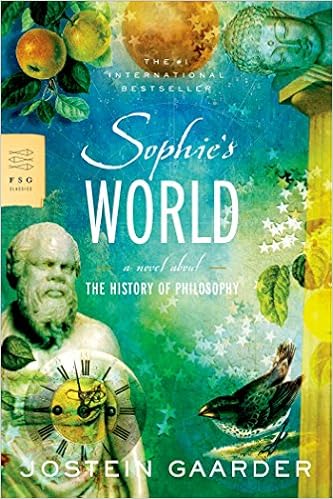
I revisited the one below to lead a discussion about for the 13-15 year olds I mentor at my homeschool co-op. I need to revise my rating for it in Goodreads down to 4 stars as I’ve never agreed with his explanation of 9/11. It’s not a blow=by-blow play of WW1 but how WW1 fits in with the broader context of world history.
I got this book below in Audible. I loved the author’s previous two books about motherhood, so I figure I’ll love this third one. I’ve grown up as a mother reading Katrina’s books, having read the first one, Mitten Strings for God, when my oldest was 6. I’m still stuck in Chapter 1 because of all my other great listens of books and podcasts but I know I will finish it. Katrina knows how to tell great personal stories that resonate with mothers.
The next three I got through Scribd. Did I tell you how amazing it is? Do sign up for it! You will love it if you are crazy about books like I am.
A Wilder Rose is such a clever title for a fictionalized account of Laura Ingalls Wilder’s only daughter, Rose Wilder Lane. A fascinating story of how it might have looked and sounded when she collaborated with her mother to write the Little House books. The narrator does a superb job with different voices, especially Laura’s. I wonder what Laura thinks about it and her everlasting fame.
This is what Marilla’s life might have looked like as a little girl and then growing up. How did she meet John Blythe, Gilbert’s father, and fall in love? Again, I got it through Scribd.
I choose to read the Book of Mormon by myself and with my family every morning as a ritual because I don’t want to miss a day, it is so full of light. I love the study guide below to guide our family’s discussions around the dinner table.


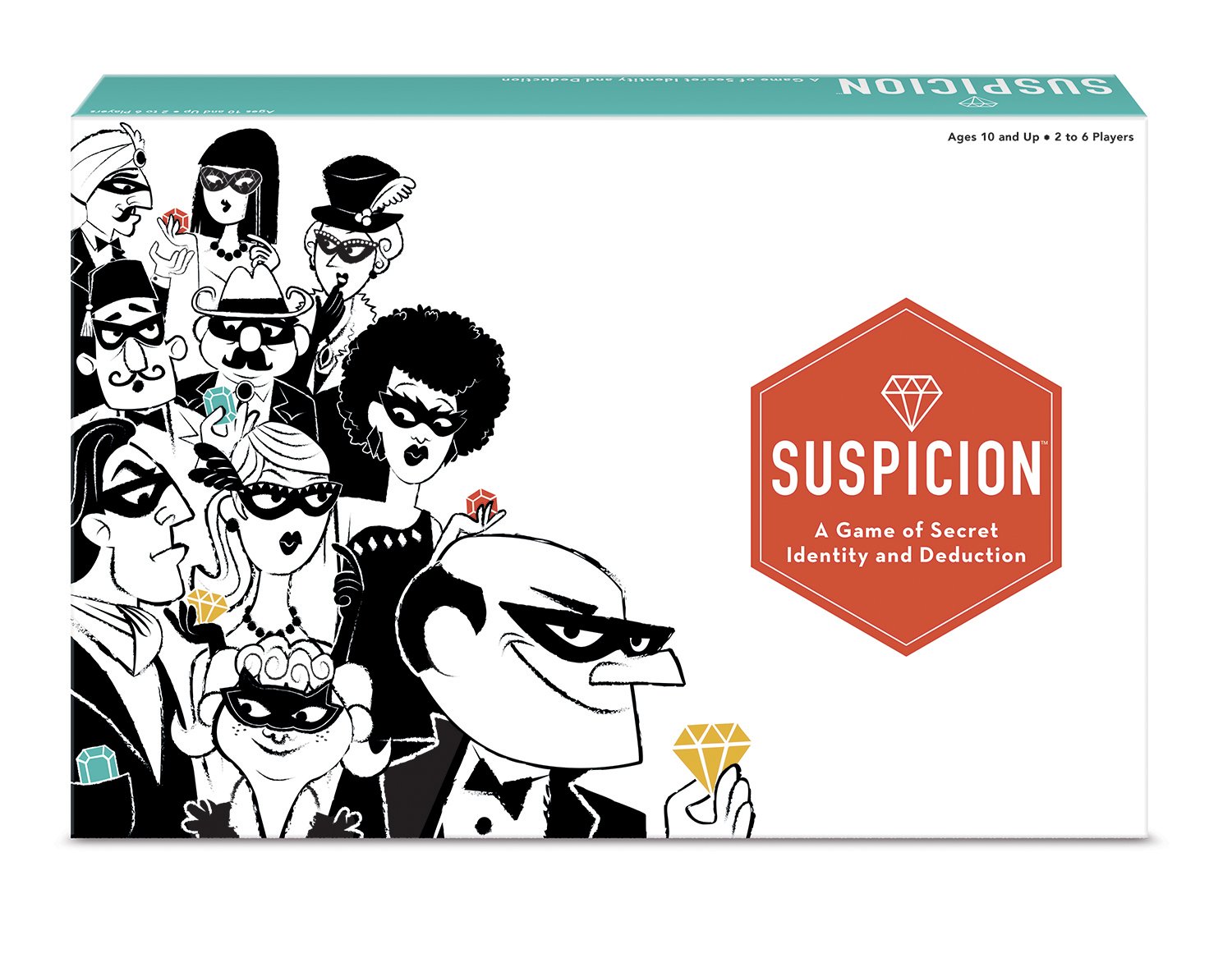


 The kids weren’t comfortable enough to super get into this game. Most of them are 12 and older so they have the ability. They were too inhibited and would not “own it/rock it.” I could foresee problems with them judging them each other and being rude so I turned it into a cooperative game. The six of them were all on the same team and the two moms were the judges. I challenged them to see if they could get 20 points in 30 minutes. That was much too short of time. In the future I will give them an hour. I can foresee this would be a super fun game if you have the right crowd. I want to play it with my adult children for one of my online family game nights. Can’t wait! Since the mentors of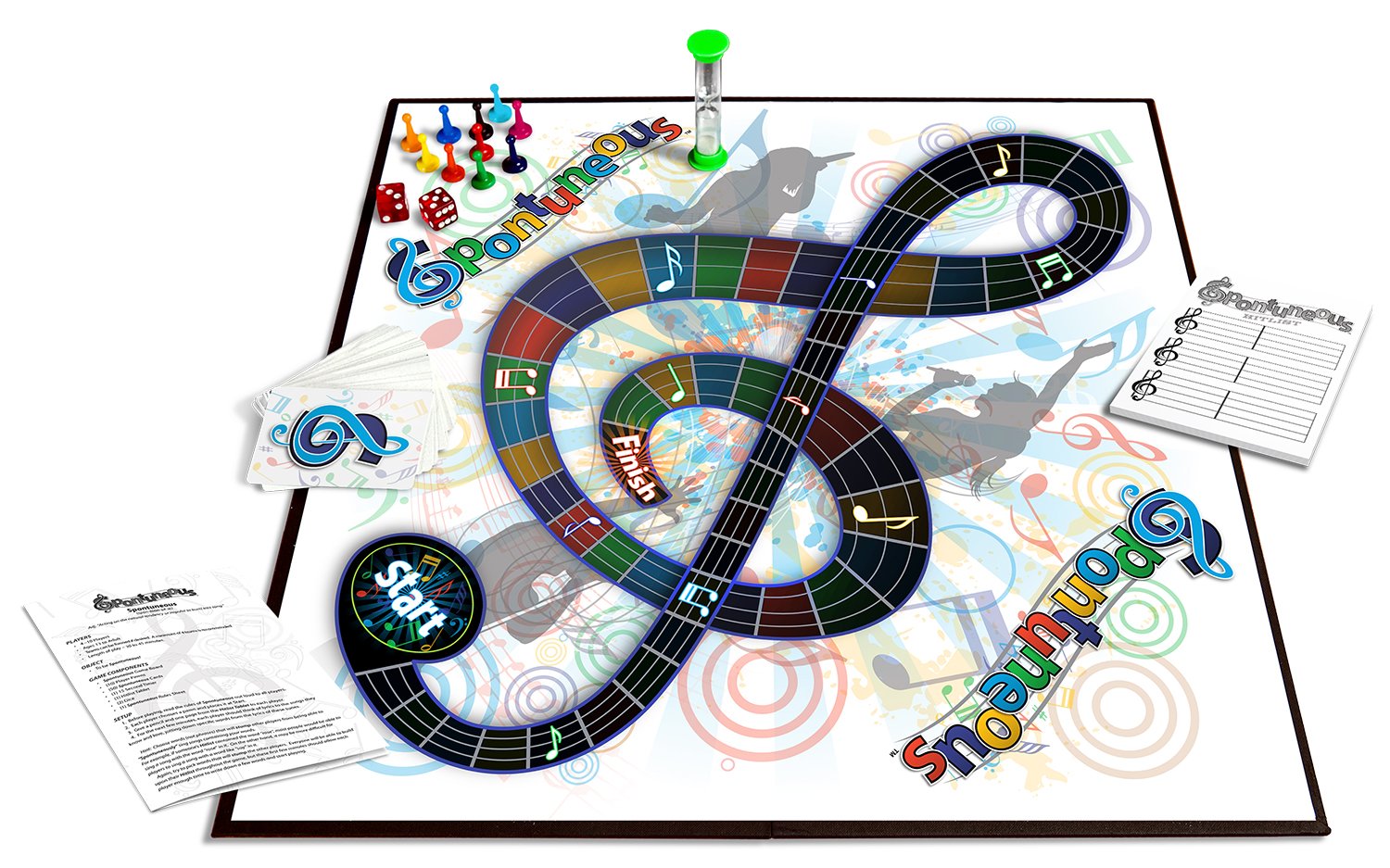














 Tree of Life Mothering